Jal Mahal: The Floating Lake Palace of Jaipur | India Purple Travel Guide
(map, reviews)
This is Premium Content! To access it, please download our
Backpack and Snorkel Purple Travel GuideThe Jal Mahal (literally ‘Water Palace’) is one of Jaipur's most instantly recognizable and captivating sights. Floating gracefully in the center of the Man Sagar Lake, this 18th-century structure is less a functional palace and more a royal pleasure retreat, renowned globally for its stunning aesthetic and unique architectural placement.
Here at Backpack and Snorkel Travel Guides, we promote self-guided walking tours.
But we realize that not everybody likes to walk by themselves in a foreign city. So, just in case that you rather go with ab guide: NO PROBLEM! Please see the GuruWalk and Viator tours below.
free GuruWalk tours
paid Viator tours
Importance: An Iconic Photograph
The Jal Mahal is an icon of the Pink City and a must-see for its sheer visual poetry.
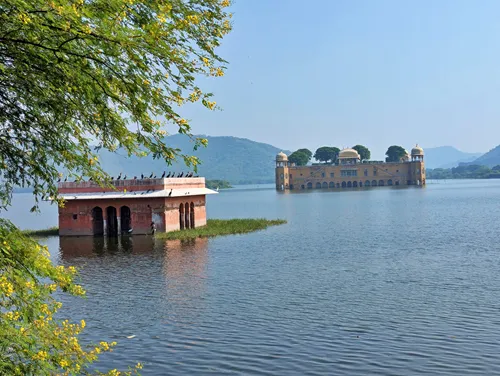
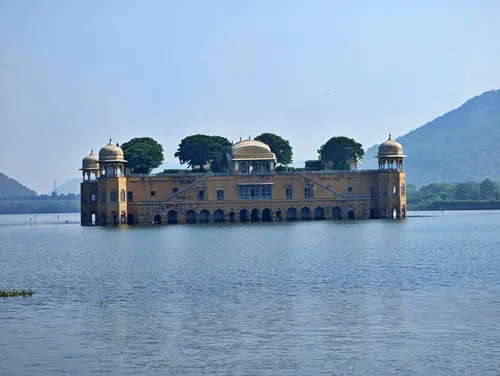
Architectural Harmony: It is a prime example of Rajput architecture (featuring intricate chhatris, or domes) seamlessly integrated with Mughal elements (like the symmetrical halls and arches). Its true beauty, however, lies in its relationship with the water. The palace appears to be half-submerged, reflecting perfectly in the often-still waters of the lake, creating a spectacular illusion, especially at sunset or under moonlight.
Engineering Marvel: The stone walls and base of the palace, which remain underwater, are specially designed to withstand the constant pressure and moisture of the lake without being saturated, a remarkable feat of pre-modern Indian engineering.
History, Builder, and Function
The palace itself was built by Maharaja Sawai Jai Singh II (the founder of Jaipur city) in the 1730s.
Original Purpose: The Maharaja originally constructed a dam across the River Darbhavati to create the Man Sagar Lake, initially to serve as a water conservation measure for the local area.
The Palace: The Jal Mahal was built later as a pleasure pavilion and a venue for the royal family’s duck hunting expeditions and large picnics. It was never intended to be a full-time residence but a serene retreat where the king could escape the heat and the pressures of the court.
Architecture: Five Stories, Four Submerged
The most extraordinary feature of the Jal Mahal is its design, which plays directly with the surrounding lake:
Structure: The palace has five stories, four of which are submerged beneath the lake's surface when the water is full, leaving only the top floor and its beautiful gardens visible.
Visible Level: The visible top floor is a long, symmetrical structure capped by four octagonal chhatris (pavilions) at the corners and a larger central pavilion.
Rooftop Garden: The terrace once housed a beautiful rooftop garden in the Mughal style, adding to the palace's recreational charm.
Visitor Access and Experience
Unfortunately, the interior of the Jal Mahal is closed to the public.
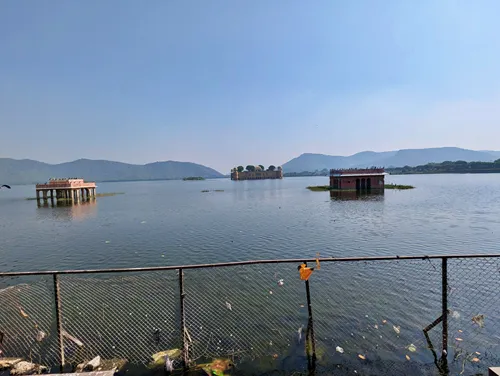
Viewpoint: You can only view the palace from the Man Sagar Lake embankment along the road leading toward Amber Fort. There is a long promenade where you can stop, take photos, and watch the palace reflect in the water. Unfortunately, there is quite a bit of trash in the water.
Best Time to Visit: The best time to appreciate the palace is during the early morning or late evening. At night, the entire structure is lit up, transforming into a dazzling spectacle.
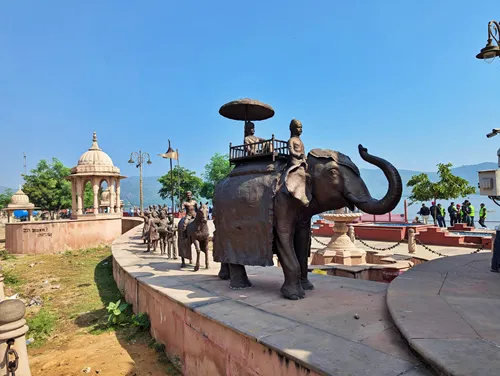
Local Experience: Along the promenade, you will find vendors, camel rides, and local artists, but other than that, there is nothing else to do here. If you are short on time, then you can just ask your driver to slow down so that you can take a photo.
Where do you want to go now?



Author: Rudy at Backpack and Snorkel
Bio: Owner of Backpack and Snorkel Travel Guides. We create in-depth guides to help you plan unforgettable vacations around the world.

Other popular Purple Travel Guides you may be interested in:
Like this Backpack and Snorkel Purple Travel Guide? Pin these for later: