City Palace Museum Jaipur: History and Architecture of the Rajput Royal Seat | India Purple Travel Guide
(map, reviews, website)
This is Premium Content! To access it, please download our
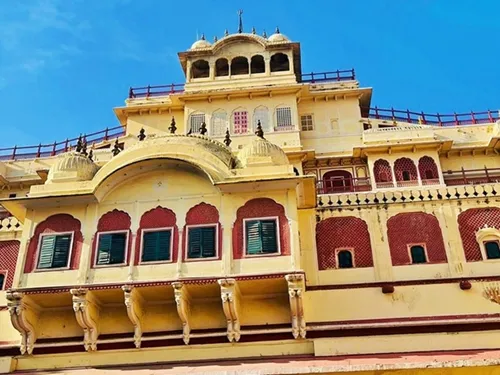
Backpack and Snorkel Purple Travel GuideThe City Palace is the physical and spiritual heart of Jaipur. Located right in the center of the walled ‘Pink City’, this vast complex serves as a remarkable fusion of traditional Rajput, Mughal, and European architectural styles. A significant portion of the palace remains the official residence of the Jaipur royal family even today, making it a living piece of history.
Here at Backpack and Snorkel Travel Guides, we promote self-guided walking tours.
But we realize that not everybody likes to walk by themselves in a foreign city. So, just in case that you rather go with ab guide: NO PROBLEM! Please see the GuruWalk and Viator tours below.
free GuruWalk tours
paid Viator tours
Visitor Information and Admission
The City Palace offers two distinct visiting experiences, depending on your interest and budget:
Ticket Type |
Price (for foreigners) |
Access & Duration |
Hours |
|---|---|---|---|
Standard Admission |
₹1000 |
City Palace Courtyards, Galleries |
9:30am– 6:30pm |
Composite Admission |
₹1250 |
City Palace Courtyards, Galleries, Jaigarh, Royal Cenotaphs |
9:30am– 6:30pm |
Museum at Night |
₹600 |
City Palace Courtyards, Galleries, Light & Sound Show |
7:00pm-7:30pm |
Royal Tour |
₹4000 |
90-minute guided tour through the private quarters (Chandra Mahal), incl. famous Blue Room, and private viewing decks. |
9:30am– 6:30pm |
The Royal Grandeur Tour: Access to the Chandra Mahal
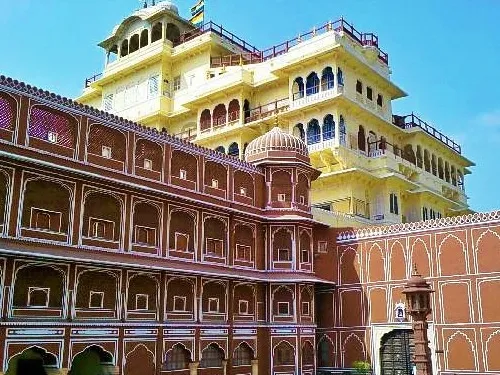
This premium, 90-minute tour is what makes the City Palace experience truly unique. It grants visitors guided access to the Chandra Mahal, the seven-story tower and current official residence of the descendants of the Jaipur Maharajas.
What Makes This Tour Special?
The higher price of the Royal Grandeur Tour is due to its access to restricted areas that offer an intimate glimpse into the royal lifestyle:
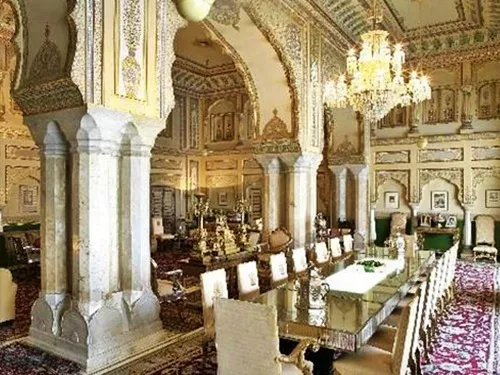
The Blue Room (Sukh Niwas): This is the highlight. This is a magnificent, exquisitely decorated private drawing room featuring blue-and-white motifs and luxurious chandeliers. As it is part of the functioning residence, access to such a beautifully preserved room is extremely rare in Indian palace tours.
Private Balconies and Viewing Decks: The tour takes you up to the higher floors of the Chandra Mahal, offering unparalleled panoramic views over the inner courtyards and the entire walled city of Jaipur, which was planned according to the King's vision.
Exclusive Narrative: The tour is conducted by a dedicated guide who shares anecdotes and historical details specific to the private lives of the royal family, providing a level of detail not available in the public museum areas.
In essence, the Royal Grandeur Tour is for the traveler who wants to step beyond the museum halls and actually walk through the living history of the Jaipur royal family.
Importance: A Living Royal Legacy
The City Palace is important for several key reasons:
Urban Planning Masterpiece: It was one of the first structures built by Maharaja Sawai Jai Singh II when he founded Jaipur in 1727 AD. It formed the central nexus of the meticulously planned city layout.
Cultural Fusion: The palace was built during a period of relative peace and showcases a seamless blend of the vibrant Rajput color and design with the symmetrical elegance of Mughal architecture.
Active Residence: The Chandra Mahal section of the palace still houses the descendants of the former ruling family.
What You Will See: Courtyards and Gates
A visit is essential for experiencing the city's royal heritage and its most iconic architectural features:
Mubarak Mahal (The Welcome Palace): This is the first main building you encounter. Is is a perfect example of blended architecture and currently houses the Museum of Royal Textiles and
Diwan-i-Khas (Hall of Private Audience): This pavilion is known for its two enormous Ganga Jali silver urns. These two sterling silver vessels are recognized by the Guinness Book of World Records as the largest silver objects in the world, used by Maharaja Madho Singh II to carry holy Ganga river water on his trip to England in 1902.
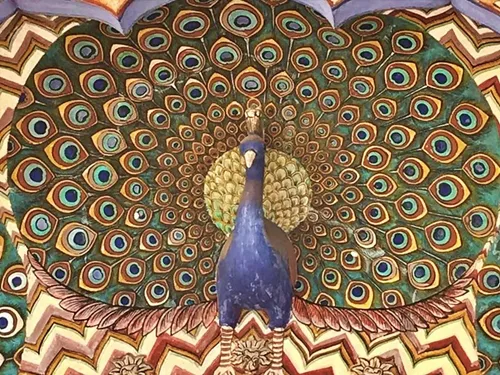
Pitam Niwas Chowk (The Courtyard of the Peacock Gates): This is the most famous and photographed part of the palace. It is a small inner courtyard that leads to the Chandra Mahal. The courtyard is defined by four spectacular, intricately painted gates, each representing a different season and a different deity:
The Peacock Gate (Leheriya): Represents Autumn and is dedicated to Lord Vishnu.
The Lotus Gate: Represents Summer and is dedicated to Lord Shiva-Parvati.
The Green Gate (Leheriya): Represents Spring and is dedicated to Lord Ganesha.
The Rose Gate: Represents Winter and is dedicated to Goddess Devi.
Chandra Mahal: The Private Residence: The Chandra Mahal is the seven-story residence of the current royal family. If you purchase the premium Royal Grandeur ticket, you gain access to beautifully restored private rooms like the famous Blue Room (Sukh Niwas), which is one of the palace's most exclusive and stunning interior spaces.
Where do you want to go now?






Author: Rudy at Backpack and Snorkel
Bio: Owner of Backpack and Snorkel Travel Guides. We create in-depth guides to help you plan unforgettable vacations around the world.

Other popular Purple Travel Guides you may be interested in:
Like this Backpack and Snorkel Purple Travel Guide? Pin these for later: