Chandni Chowk: Old Delhi's Pulsing Heart and Famous Market | India Purple Travel Guide
(map, reviews, website)
This is Premium Content! To access it, please download our
Backpack and Snorkel Purple Travel GuideOnce you are done visiting Jama Masjid, we are ready to start our Self-Guided Walking tour of Chandni Chowk.
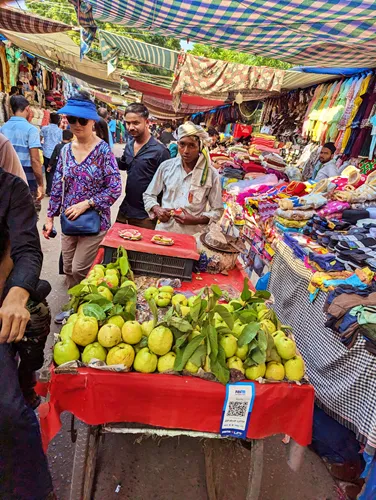
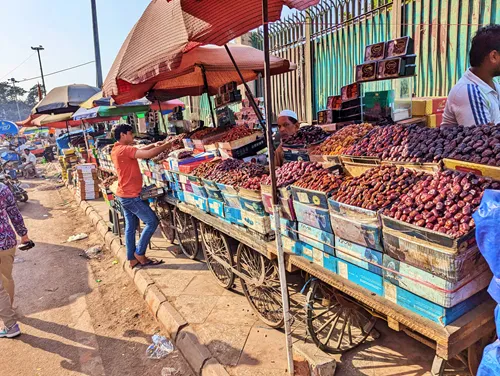
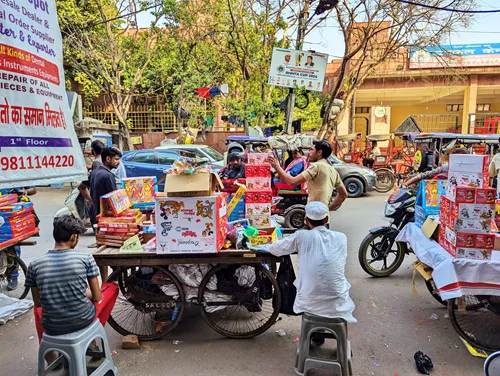
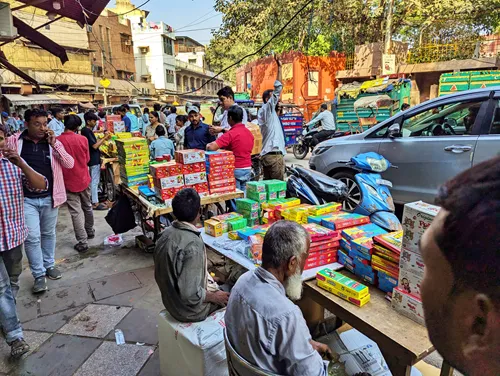
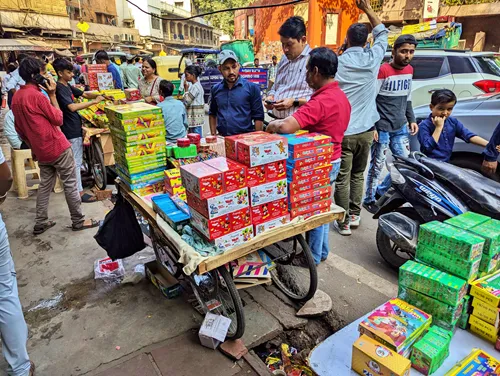
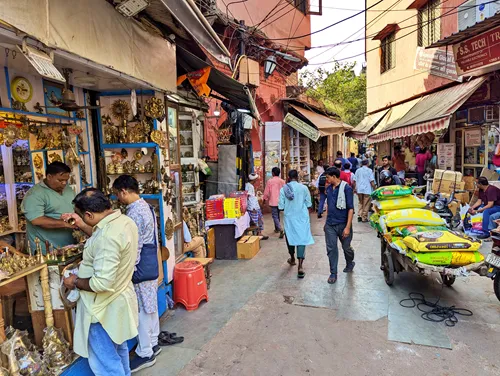
Chandni Chowk was originally built by Emperor Shah Jahan in the 17th century. This area was the grand boulevard of his new capital, Shahjahanabad. Today, it remains one of the largest and busiest wholesale markets in Asia, offering a sensory overload of sights, sounds, and smells. While the chaos can be overwhelming, this is where you witness the true, pulsating spirit of Delhi.
Here at Backpack and Snorkel Travel Guides, we promote self-guided walking tours.
But we realize that not everybody likes to walk by themselves in a foreign city. So, just in case that you rather go with ab guide: NO PROBLEM! Please see the GuruWalk and Viator tours below.
free GuruWalk tours
paid Viator tours
Why You Should Visit
Chandni Chowk is the perfect antidote to the solemnity of the Red Fort, providing a vibrant, living contrast. Where the fort was the symbol of imperial power, the Chowk was the economic and social artery that fed the empire. You come here not for a single monument, but for the experience: to taste the historic street food, navigate the winding galis (lanes), and observe the intense, concentrated commerce that has flourished here for nearly four centuries.
History and Importance
The Chowk's name, ‘Moonlit Square’ or ‘Moonlit Crossing’, comes from the central canal that once ran down its length.
This canal brought water from the Yamuna River into the city. It was essential for providing water to the royal buildings (including the Red Fort), watering the median gardens, and, most famously, reflecting the moonlight and the silver shops that lined its banks—hence the name ‘Moonlit Square’.
The space occupied by the canal was a linear water feature and garden, defining the street's central axis from the Lahori Gate of the Red Fort all the way to Fatehpuri Mosque.
After the 1857 Revolt (the First War of Independence), the British consolidated power and made radical changes to Old Delhi to assert control and modernize the city according to their own standards. They saw the canal and the Mughal gardens as outdated, drained the canal, filled in the water channel, and paved over the central median. In the newly paved center of the road, the British built a prominent Victorian-style Clock Tower (Ghanta Ghar) around 1880. This tower became the new, distinct central landmark of the entire square, effectively replacing the visual and structural presence of the canal and its reflections. The British also installed a tram line where the canal once flowed.
The bazaar was designed by Jahanara Begum, Shah Jahan’s favorite daughter, making it a rare example of a major public work commissioned by a Mughal woman. The street originally stretched from the Lahori Gate of the Red Fort to the Fatehpuri Mosque.
Modern Day: Despite the transformation, the essence of trade and specialization remains. The street has fractured into numerous galis and sub-markets, each dedicated to a specific commodity (e.g., spices, paper, jewelry).
Architecture
While the grandeur of the original Mughal architecture has been largely obscured by shops and modernization, evidence of its past remains. The street is anchored by major religious institutions—the Fatehpuri Masjid at the western end and the Shwetambar Jain Temple and Gurudwara Sis Ganj Sahib closer to the Red Fort—illustrating the area’s historic religious tolerance and diversity. Look up past the storefronts and advertisements to spot the original, beautiful Mughal-era havelis and intricately carved residential balconies.
Self-Guided Walking Tour of Chandni Chowk
This Self-Guided Walking Tour of Chandni Chowk starts at the Silver Chowk and focuses on the most significant stops in and around the main Chandni Chowk road, allowing you to walk (or take a cycle rickshaw) through the best of Old Delhi.
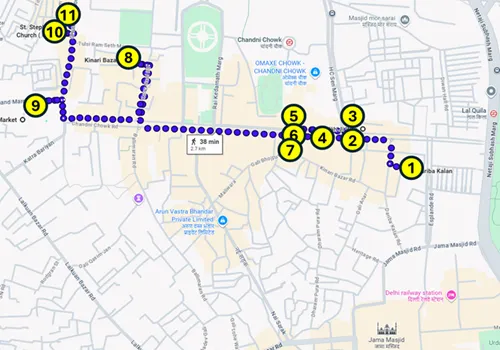
1 = Dariba Kalan (The Silver Chowk)
2 = Gurudwara Sis Ganj Sahib
3 = Wah Ji Wah Restaurant
4 = Ghantewala Confectioners
5 = Natraj Dahi Bhalla
6 = Pt. Babu Ram Paranthe Wala
7 = Paranthe Wali Gali (Street of Parathas)
8 = Kinari Bazaar
9 = Gadodia Market
10 = St. Stephen's Church
11 = Fatehpuri Wholesale Market
Dariba Kalan (The Silver Chowk)
(map, reviews)
This is Premium Content! To access it, please download our
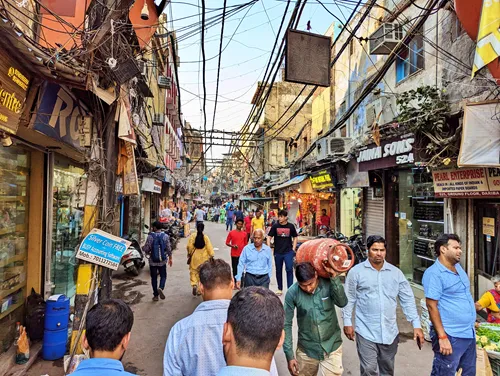
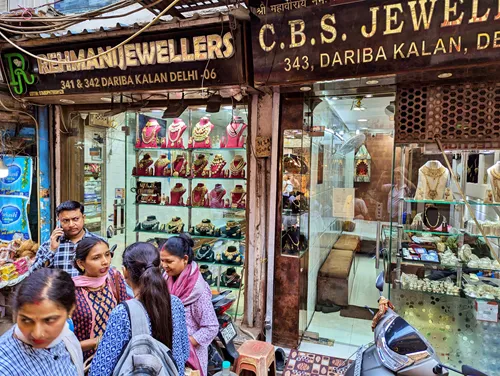
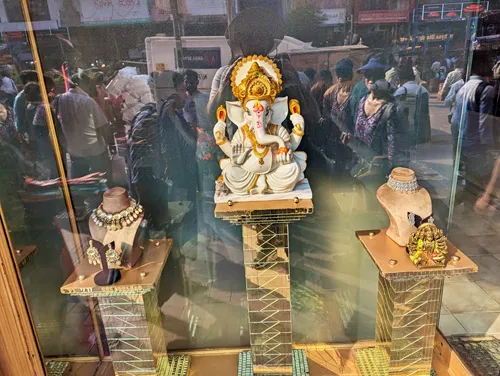
Backpack and Snorkel Purple Travel GuideThe Dariba Kalan is a legendary street that serves as the enduring heart of luxury commerce in Old Delhi. It is not defined by a single shop but by the dense, narrow concentration of trade that has existed here since the 17th century. Walking this lane offers a tangible connection to the glittering world of Mughal aristocracy and the exclusive retail hub of the imperial capital.
Feature |
Significance and Experience |
|---|---|
Name Origin |
The name Dariba Kalan literally means ‘The Street of the Peerless Pearl’ or 'The Big Incomparable Street.' This reflects its original status as the most exclusive market selling pearls, diamonds, and precious stones to the royal court and the elite women of the zenana. |
Primary Commerce |
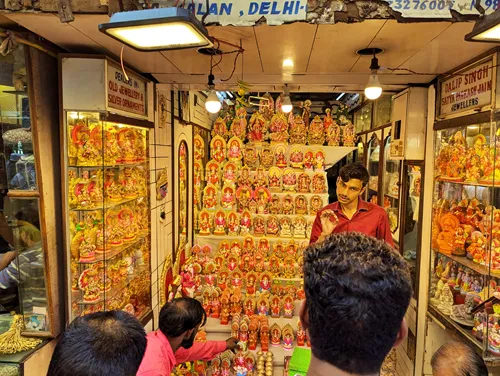
While it began with pearls, the street became synonymous with high-quality silver jewelry and artifacts after the Mughal era. Today, it is Delhi's most famous silver market, offering an incredible variety of intricate silver jewelry (necklaces, bangles, payals or anklets), traditional pooja items, and antique-style silver artifacts and utensils. |
The Perfume Legacy (Attar) |
The lane is also famous for its shops selling authentic attar (or ittar). These are highly concentrated, non-alcoholic natural perfumes and essential oils—a direct remnant of the luxury trade that catered to the Mughal court. Scents like rose, jasmine, sandalwood, and khus (vetiver) transport you back to the opulent palace chambers. |
The Experience & Safety |
This narrow, bustling alley is a true feast for the senses. The small shops are crammed with an endless display of intricate metalwork, and the air is thick with the scent of silver polish and exotic attar. However, due to the dense crowds and high-value commerce, visitors should exercise extreme caution. Pickpockets are highly active in this crowded environment. Secure all valuables, keep bags zippered and in front of you, and avoid wearing conspicuous jewelry. |
Contextual History |
Located just off the main Chandni Chowk thoroughfare, the Dariba Kalan provides a fascinating glimpse into the commercial order of Shahjahanabad. It was deliberately situated close to the palace complex (Red Fort) to ensure security and exclusive access for the Emperor's treasury officials and family members. |
Recommended Visit |
Even if you are not planning to buy, the experience of walking this lane—observing the concentration of specialized craft and smelling the deep, resinous perfumes—provides one of the most immediate and visceral connections to the luxury, high-value commerce of the 17th-century capital. |
Gurudwara Sis Ganj Sahib
(map, reviews, website)
This is Premium Content! To access it, please download our
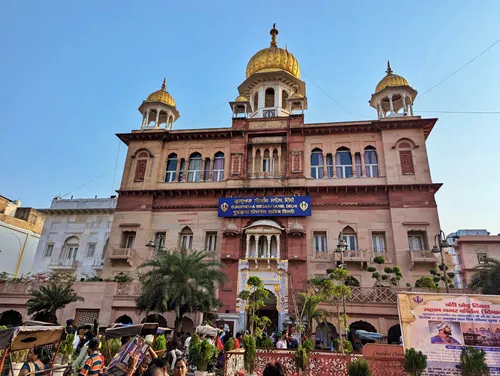
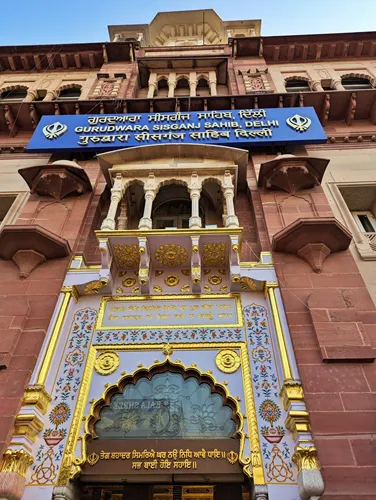
Backpack and Snorkel Purple Travel GuideLocated directly on the bustling central thoroughfare of Chandni Chowk, Gurudwara Sis Ganj Sahib is one of the most historically significant and deeply revered Sikh temples in India. Its white marble structure and signature golden domes stand as a profound contrast to the commercial chaos that surrounds it.

Feature |
Historical and Spiritual Significance |
|---|---|
History & Importance |
This shrine is a holy site commemorating the martyrdom of Guru Tegh Bahadur (the Ninth Sikh Guru) in 1675 CE. He was publicly executed here under the orders of Mughal Emperor Aurangzeb for refusing to convert to Islam and for championing the right of religious freedom for the Hindu Kashmiri Pandits. The Gurudwara was built over the spot where his head (Sis) was severed. |
Architectural Detail |
While the site is ancient, the current structure is an elegant marble and red sandstone construction, topped with striking gold-plated domes that are visible from afar. The complex includes the central Darbar Sahib (prayer hall), the memorial pillar marking the execution site, and a well that was historically used by the Guru during his imprisonment. |
The Experience: Peace Amidst Chaos |
Stepping inside the Gurudwara offers an immediate sense of tranquility and refuge from the frantic energy of Chandni Chowk. The atmosphere is filled with the continuous, melodious recitation of the Gurbani (Sikh scriptures and hymns, known as Kirtan), fostering a deep sense of peace. |
The Langar (Community Kitchen) |
Visitors are welcome to observe or volunteer at the Langar, the free community kitchen where food is prepared and served to thousands of people every day, regardless of caste, creed, or wealth. This institution is a powerful physical expression of the Sikh principle of equality and selfless service (seva). |
Recommended Visit |
The best time to visit is during the early morning or late evening when the market noise subsides. It provides a vital, spiritual counterpoint to the commercial history of Shahjahanabad. |
Visitor Note |
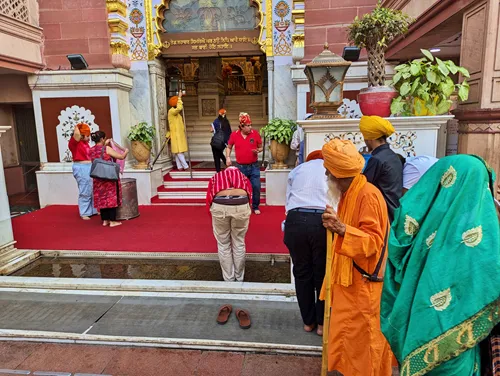
As a place of worship, strict protocol must be observed. All visitors must remove their shoes and socks outside the complex. It is mandatory to cover your head (headscarves are provided at the entrance), and modesty in dress is appreciated. Silence and reverence are expected inside the main prayer hall. |
Restaurant Review: Wah Ji Wah, Chandni Chowk Area
(map, reviews, website)
This is Premium Content! To access it, please download our
Backpack and Snorkel Purple Travel GuideWah Ji Wah is a highly popular and well-regarded restaurant chain that offers a modern, reliable, and entirely vegetarian dining experience in the heart of Old Delhi. It stands out in the bustling chaos of Chandni Chowk by providing a clean, contemporary space focused on flavor innovation, particularly using soya and paneer.
Feature |
Detailed Review and Recommendation |
|---|---|
Cuisine & Focus |
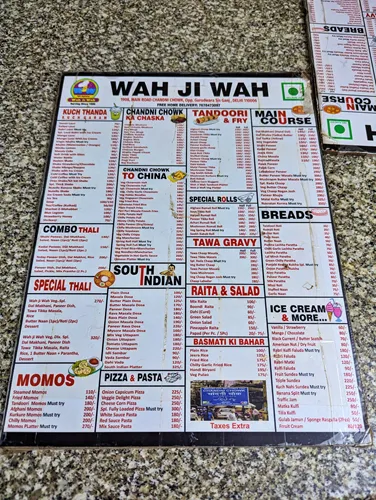
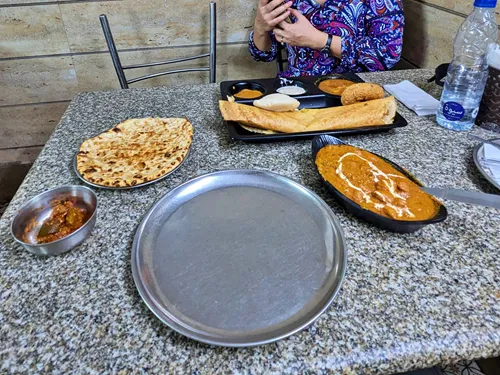
The restaurant focuses entirely on flavorful North Indian street food and grills, centered around preparations of Soya Chaap (textured vegetable protein) and Paneer (Indian cheese). Is is famous for its ability to mimic the smoky, rich flavors and textures of non-vegetarian kebabs and tikkas, making it an excellent choice for strict vegetarians or those seeking vegan-friendly options. |
Must-Try Specialties |
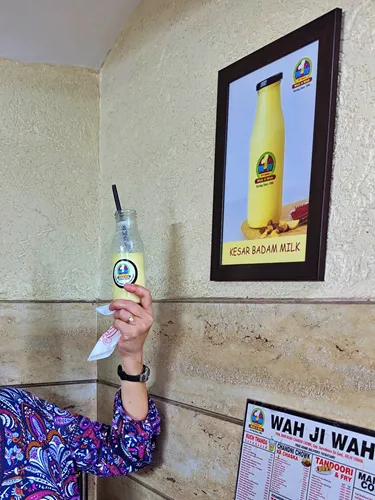
The menu is deep, but the signature dishes are essential: |
Atmosphere & Experience |
Wah Ji Wah offers a welcome respite from the intense noise and congestion of Chandni Chowk. Unlike the traditional, chaotic street stalls, the dining area provides a more structured, casual environment. This makes it a clean and safe option for travelers. |
Traveler's Tip (The Upstairs) |
To truly escape the hustle and bustle, head to the upstairs dining area. It offers necessary peace and quiet. Be aware that the ceiling is quite low in this old building, which can make walking a challenge for taller visitors, but it is certainly a unique and interesting experience! |
Consistency & Quality |
The food here is consistently very good. The focus on quality ingredients and a modern preparation kitchen ensures a high standard. Look out for seasonal specials like the tempting gujias for a festive indulgence. |
Ghantewala Confectioners: A Revived Mughal Legacy
(map, reviews, website)
This is Premium Content! To access it, please download our
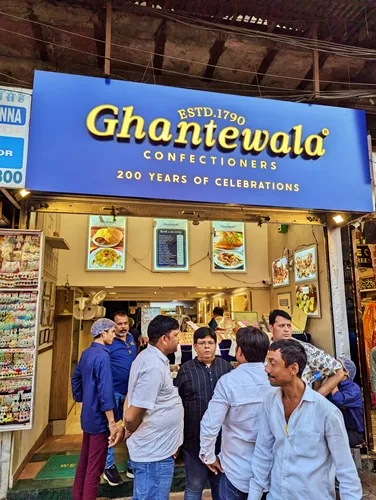
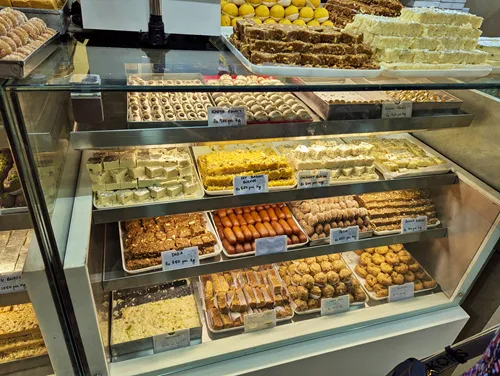
Backpack and Snorkel Purple Travel GuideGhantewala Confectioners is a living piece of Delhi’s culinary history, boasting a legacy that stretches back over 230 years to the peak of the Mughal Empire. While the business faced immense challenges and reported closures, it has been successfully revived by the founding family's successors, preserving the traditional recipes that delighted emperors and common citizens alike.
Feature |
Detail and Significance |
|---|---|
Founding & Royal Patronage |
Established in 1790 CE by Lala Sukh Lal Jain, the shop quickly became the official supplier of sweets to the Mughal court, including Emperor Shah Alam II, granting it immense status. |
Origin of the Name |
The name Ghantewala (The Bell Guy) was earned because of a prominent clock tower bell (ghanta) near its original location. The Emperor's staff would refer to it as the ‘sweet shop near the bell,’ and the name endured. |
Current Location & Legacy |
Following a temporary interruption, the legacy continues at its new, accessible location in Chandni Chowk, near Sis Ganj Gurudwara and opposite Haldiram's. The shop has admirably maintained its old-world charm while ensuring the highest quality. |
Specialties & Flavor |
Ghantewala is renowned for maintaining the authentic, rich flavor of its traditional sweets. Their absolute specialties remain the unique, translucent, chewy Karachi Halwa and the classic, flaky, dense Sohan Halwa. The consistency and pure, traditional essence—achieved by using high-quality desi ghee—have delighted generations. |
A Must-Visit |
Beyond the famous halwas, the shop offers a tempting variety of festive indulgences, such as the elaborate Gujias. It is an essential stop for anyone craving authentic Indian sweets in Delhi’s bustling food scene, delivering a perfect balance of texture and sweetness with every bite. |
Natraj Dahi Bhalla
(map, reviews, website)
This is Premium Content! To access it, please download our
Backpack and Snorkel Purple Travel GuideThe legendary Natraj Dahi Bhalla stall is a quintessential Chandni Chowk culinary institution. For decades, this small, unassuming shop on the main thoroughfare has perfected a single, iconic dish, cementing its status as a mandatory stop for every Delhi food lover.
Feature |
Detailed Review and Culinary Focus |
|---|---|
What It Is Famous For |
Natraj is almost singularly famous for its Dahi Bhalla. This dish consists of incredibly soft, melt-in-your-mouth lentil dumplings (bhalla) that are deep-fried, then soaked in water to become spongy, and finally drenched in a mixture of thick, chilled, and slightly sweetened yogurt (dahi). |
The Flavor Experience |
The Dahi Bhalla is a masterpiece of balance. The dish is topped with a spicy red chili chutney, a tangy tamarind chutney, and often sprinkled with chaat masala. The overall experience is a symphony of flavors—simultaneously sweet, spicy, tangy, and cool—offering a refreshing counterpoint to the heat and bustle of the market. |
Location & History |
Located near the Gurudwara Sis Ganj Sahib, Natraj has been operating for over 80 years. Its commitment to focusing on just two main dishes—Dahi Bhalla and Aloo Tikki—ensures a consistency and purity of taste that few competitors can match. |
The Experience & Tip |
Be prepared for a crowded, high-energy, and quick experience. There is no formal seating; patrons stand at the counter or nearby to devour their plates. The speed of service is exceptional, but the area is often shoulder-to-shoulder with people. It Is best to be ready with your order and embrace the lively street food atmosphere. |
Must-Try Dish |
While they also offer excellent Aloo Tikki (crispy potato patties), the Dahi Bhalla is the reason people queue up—it is arguably the best rendition of this street food classic in all of Delhi. |
Pt. Babu Ram Paranthe Wala
(map, reviews, website)
This is Premium Content! To access it, please download our
Backpack and Snorkel Purple Travel GuideBefore reaching the famous Paranthe Wali Gali (The Lane of Parathas), you will find Pt. Babu Ram Paranthe Wala, a highly esteemed culinary destination that stands on its own merit. This shop specializes in the quintessential North Indian flatbread, the paratha, but prepares it in a distinct style that sets it apart from other eateries.
Feature |
Detailed Review and Culinary Focus |
|---|---|
What It Is Famous For |
Babu Ram specializes in deep-fried parathas. Unlike the dry-roasted or pan-fried varieties common in-home cooking, these parathas are submerged in ghee (clarified butter) during cooking, giving them a unique golden, crispy exterior and an incredibly satisfying richness. |
Unique Preparation |
The shop offers a wide and imaginative variety of fillings. While classic options like Aloo (potato) and Gobhi (cauliflower) are available, they also feature more unusual ingredients like Matar (peas), Karelas (bitter gourd), Mirchi (chilli), and Pudina (mint). Each paratha is served with traditional accompaniments like spicy potato-vegetable curry, a sweet pumpkin curry, and a tangy tamarind chutney. |
The Experience & Tip |
This is a heavy, extremely satisfying meal, making it an ideal choice for a hearty lunch or early dinner. The dining is simple, often stand-up or at small, communal tables. Look for the visible traditional stone grinders and large cooking ovens that underscore their commitment to age-old methods. Be prepared to experience a truly authentic, oily, and delicious comfort food that defines the street cuisine of Old Delhi. |
Location Context |
Its location just before the turn-off for the main Paranthe Wali Gali means it benefits from high foot traffic but retains its own distinct identity and loyal customer base, often considered a hidden gem by locals who prefer its style. |
Paranthe Wali Gali (Street of Parathas)
(map)
This is Premium Content! To access it, please download our
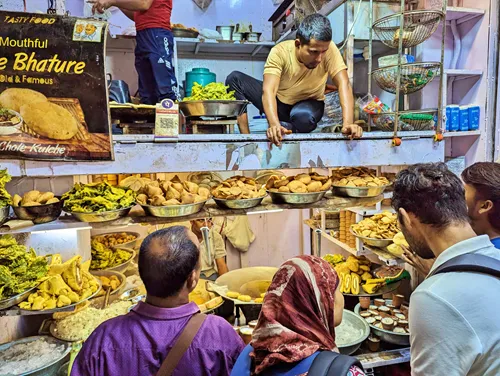
Backpack and Snorkel Purple Travel GuideThe Paranthe Wali Gali (meaning 'The Street of Parathas') is arguably the single most famous food lane in Delhi, celebrated globally for its unique, generational specialization in one of North India’s favorite flatbreads. This entire narrow side street is dedicated exclusively to the preparation and sale of the paratha, making it a unique commercial and culinary phenomenon.
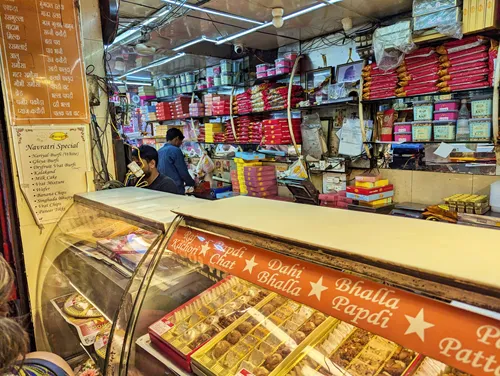
Feature |
Detailed Review and Culinary Focus |
|---|---|
History & Importance |
This lane's culinary tradition dates back over 150 years. While many shops have come and gone, the tradition is maintained by a handful of original, generations-old families who have fiercely guarded their unique methods. It remains a historical curiosity and a pilgrimage site for food lovers. |
The Unique Tradition |
The parathas sold here are distinct from the home-style parathas cooked on a dry griddle (tava). The defining feature is that they are always deep-fried (talna) in a large iron wok (kadhai) filled with desi ghee (clarified butter). This technique results in a crisp, slightly puffed, and intensely rich paratha. |
Menu & Varieties |
All dishes in the Gali are strictly vegetarian. The genius of the Gali lies in the sheer variety of fillings offered. Beyond the classics (potato, radish, cauliflower), you can find highly inventive options such as Papad, Mirchi, Nimbu (lemon), Matar (peas), and even seasonal fruit parathas, each served piping hot. |
The Experience & Serving Style |
The parathas are served as a complete, multi-course meal. Instead of a single side, they are accompanied by a generous array of traditional pairings: a spicy Aloo Matar (potato and pea) curry, a sweet and tangy Pumpkin curry, a flavorful mix of pickles (achar), and sometimes a simple tamarind chutney. The dining experience is quick, crowded, and authentically Old Delhi, with patrons seated at small, simple tables inside the tiny, ancient shops. |
Recommended Visit |
Recommended Visit This is an experience rather than just a meal. Come hungry, as the deep-fried nature of the parathas makes them extremely filling. It is an excellent spot for a hearty lunch and a required stop to appreciate Delhi’s specialized street-food history. |
Kinari Bazaar (The Festive Embellishment Market)
(map)
This is Premium Content! To access it, please download our
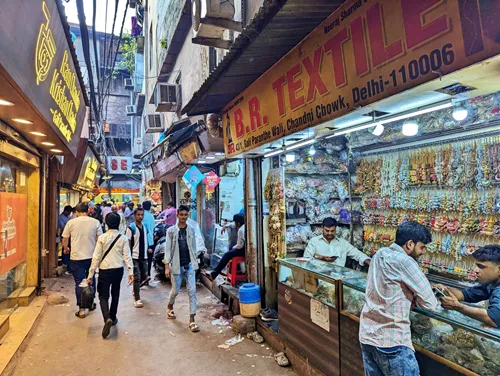
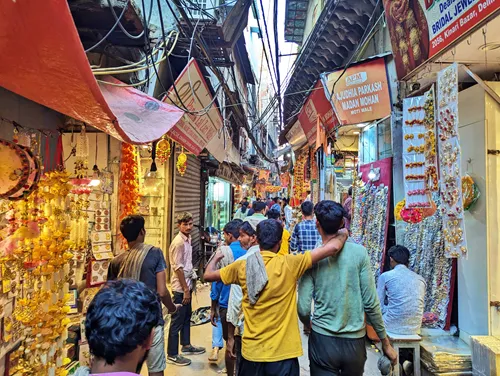
Backpack and Snorkel Purple Travel GuideThe Kinari Bazaar is a dazzling, specialized market tucked away in a narrow lane off Chandni Chowk. It is the undisputed epicenter for all things related to Indian weddings, festivals, and grand celebrations. Stepping into this bazaar is like entering a treasure trove of color, sparkle, and intricate decoration, offering a visual feast unlike any other market in Delhi.
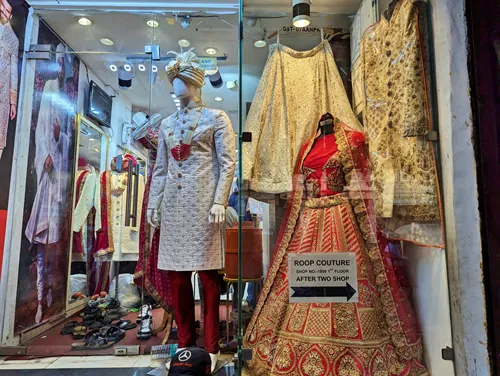
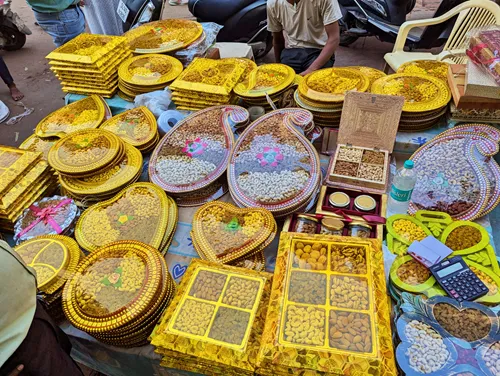
Feature |
Detailed Review and Commercial Focus |
|---|---|
What It Is Famous For |
Kinari literally translates to 'border' or 'edging'. The market specializes entirely in decorative textiles, trims, laces, ornaments, and essential embellishments needed to finish clothing, wedding attire, and decorative household items. It is where tailors and designers from across the city come to source materials. |
To See & To Buy |
The sheer volume and variety of decorative materials on display are unbelievable: |
The Experience |
The Kinari Bazaar is narrow, vibrant, and constantly buzzing with activity. The light catches the thousands of metallic threads and sequins hanging in the shops, creating a dazzling effect. It is a highly sensory experience, demanding you look up, down, and into every tiny shop front. |
Traveler's Tip |
If you are seeking dazzling, high-quality, authentic Indian decorative materials—or simply want a fantastic photo opportunity showcasing the colorful intensity of Indian craftsmanship—this is the place to explore. Given the narrowness of the lane and the specialized goods, be mindful of the passing pedestrian and bicycle traffic. |
Gadodia Market (Asia's Largest Spice Market)
(map, reviews)
This is Premium Content! To access it, please download our
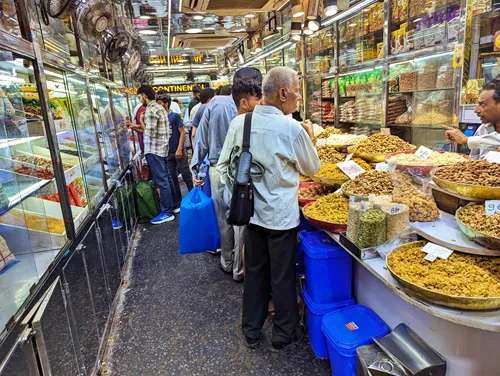
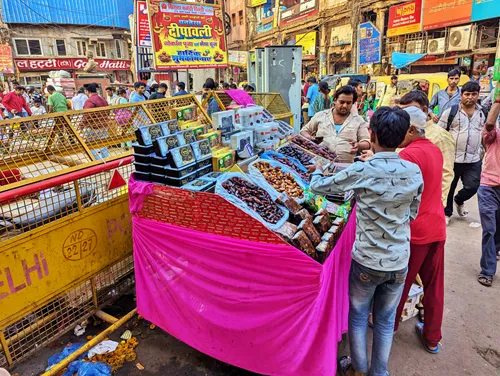
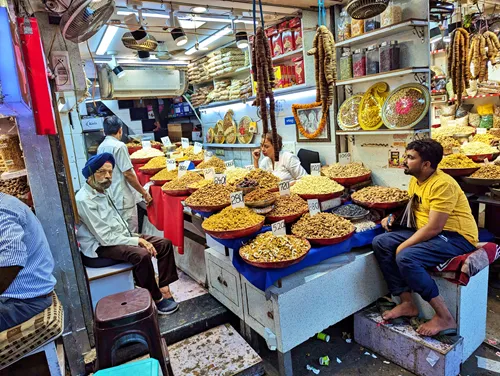
Backpack and Snorkel Purple Travel GuideLocated just beyond the Fatehpuri Market circle, the Gadodia Market complex on Khari Baoli Road anchors what is often cited as Asia’s largest wholesale spice market. This area is far more than a retail street; it is a true, bustling international trading center that has been supplying the Indian subcontinent with essential ingredients since the Mughal era.
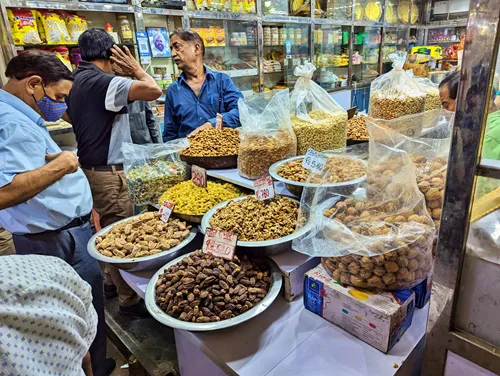
Feature |
Detailed Significance and Experience |
|---|---|
Importance & Scale |
Asia's Largest Spice Market. The entire road is dedicated to the wholesale spice trade. You will find everything from common Indian spices like chili, turmeric, and cumin to rare and exotic medicinal herbs, grains, nuts, and dried fruits (including massive sacks of cashews and almonds). The sheer volume of goods traded daily here is staggering. |
The Location Landmark |
The market centers around the Gadodia Market building, a multi-story structure that concentrates the trade. It is situated on Khari Baoli Road, named after the historical baoli (stepwell) where the water was ‘khari’ (salty). It stands as the final stop of the Chandni Chowk commercial spine. |
To See & Experience |
Prepare for a powerful sensory overload. The air is thick with the pungent, intense, and blended aromas of thousands of spices—a truly unforgettable smellscape. Visually, you can witness the relentless scale of commerce as strong porters (coolies) move massive sacks of produce through the narrow lanes, using specialized handcarts and ropes. |
Historical Context |
The Khari Baoli area has been a vital trading center since the construction of Shahjahanabad in the mid-17th century. Its strategic location close to the old city gates made it an ideal hub for importing goods from the North-West Frontier and for provisioning the imperial kitchens of the Red Fort. You are walking through centuries of unbroken commercial history. |
Traveler's Tip |
Be prepared for a congested and busy environment. Due to the nature of the wholesale trade, the ground can be uneven and occasionally dusty with spice powder. Visiting in the early morning is often quieter, though visiting later in the day offers a better sense of the market's tremendous energy. |
St. Stephen's Church (C.N.I.)
(map, reviews, website)
This is Premium Content! To access it, please download our
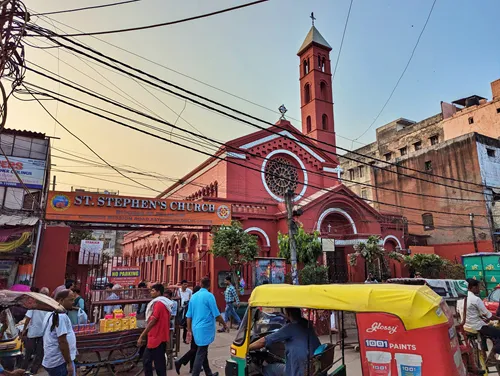
Backpack and Snorkel Purple Travel GuideStanding in quiet, solemn contrast directly adjacent to the intense commerce of the Gadodia Spice Market, St. Stephen's Church is a powerful monument to the city's colonial history and the profound shifts in political power that followed the 1857 Revolt. It offers a dramatic architectural and spiritual counterpoint to the surrounding Mughal and Hindu/Sikh landmarks.
Feature |
History and Architectural Significance |
|---|---|
History & Importance |
Consecrated in 1867 CE, St. Stephen's is one of Delhi's oldest and most historically significant churches. Its construction was symbolic, signifying the establishment of British dominion and the rise of the Christian community after the final decline of Mughal rule. It represents a layer of colonial history grafted onto the core of Shahjahanabad. |
Location Contrast |
The church is strategically located right at the far edge of Chandni Chowk, on Khari Baoli Road, directly next to the Gadodia Market. This juxtaposition of fragrant, ancient spice trade with the Gothic Revival architecture creates a fascinating and intense sensory contrast. |
Architecture |
The structure is a fine example of the Victorian Gothic Revival style, characterized by its distinctive red brick construction, pointed arches, and sturdy buttresses. Its grand façade and heavy architecture create a feeling of permanence and institutional power, sharply differing from the open, delicate pavilions of the Mughals. |
Interior & Atmosphere |
Stepping into the church compound and interior provides an immediate, dramatic respite from the street noise and congestion. The atmosphere inside is notably tranquil and solemn. The thick walls and high ceilings are designed to convey a sense of grandeur and introspection. |
To See (Stained Glass) |
The church is famous for its collection of beautiful stained-glass windows, particularly those depicting intricate biblical scenes. These windows are a major highlight, filtering natural light into vibrant, shifting colors that fall across the interior walls and pews, enhancing the spiritual atmosphere. |
Recommended Visit |
Take a moment to sit within the church's serene compound. It offers not only a quiet space for reflection but a crucial historical context, reminding visitors that Delhi's identity is built on successive layers of imperial power—Mughal, Sikh, and British. |
Fatehpuri Wholesale Market
(map, reviews, website)
This is Premium Content! To access it, please download our
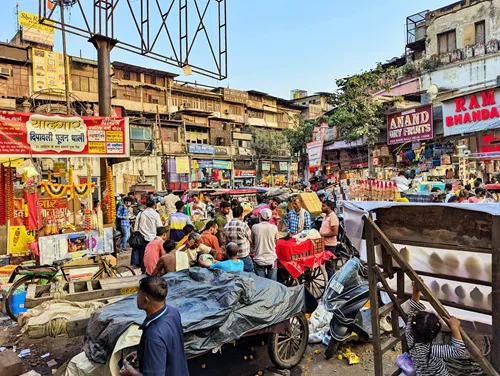
Backpack and Snorkel Purple Travel GuideLocated at the far western terminus of the main Chandni Chowk street, next to the grand Fatehpuri Mosque, the Fatehpuri Wholesale Market is the massive, chaotic, and utterly fascinating hub for essential commodities. This area serves as the western commercial anchor of Shahjahanabad, a sprawling, historic marketplace for spices, grains, and dry fruits.

Feature |
Detailed Significance and Experience |
|---|---|
Location & Anchor |
The market is defined by its location: it wraps around the Fatehpuri Masjid, a grand mosque built by one of Shah Jahan's wives. It stands at the point where the commercial artery of Chandni Chowk meets Khari Baoli Road, making it a critical junction for goods flowing into and out of the walled city. |
Core Commerce |
While the adjacent Khari Baoli is renowned for spices, the Fatehpuri Market itself handles the massive wholesale volume of all types of dried goods: Indian spices (chilies, turmeric, garam masala components), staple grains, nuts, legumes, and various dry fruits (almonds, pistachios, dates) from across the subcontinent and beyond. |
The Sensory Experience |
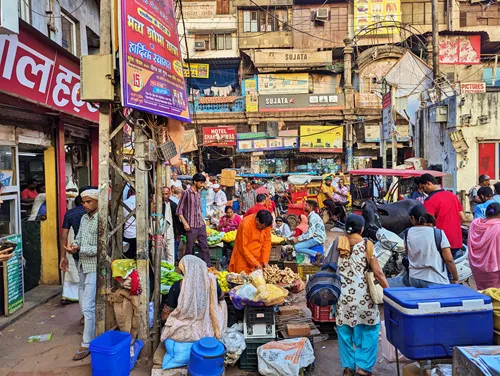
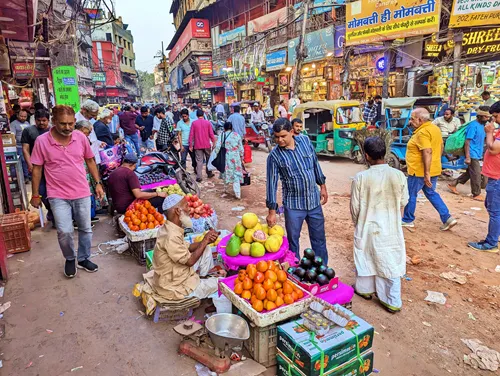
This market is a key spot for a truly vivid sensory experience. The air is intensely thick with the combined, potent aroma of thousands of spices, which often causes a delightful, tingling sensation. Visually, the narrow lanes are piled high with massive, colorful sacks of produce, creating towering, fragrant walls. |
Scale and Chaos |
Unlike the retail-focused lanes (like Dariba Kalan), Fatehpuri is characterized by serious, large-scale commerce. Be prepared for a hectic environment, as traders, buyers, and porters (coolies) move large quantities of goods through the narrow spaces, demanding attention and agility from pedestrians. |
Traveler's Tip |
If you are a serious shopper looking for high-quality spices, grains, or dry fruits in bulk, this is the ultimate destination. Even if you aren't buying, a walk through this market is a necessary experience to appreciate the sheer economic power and vitality of Old Delhi, which has functioned as a central trading hub for nearly four centuries. |
Afterwards, walk to the main road, Shyama Prasad Mukherjee Marg, to catch an Uber or taxi to your next destination.
Back to the Day 2 Walking Tour
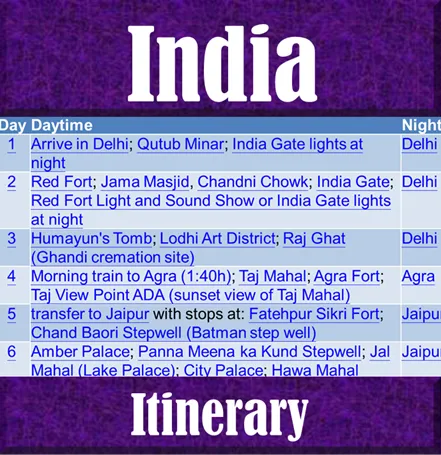
Where do you want to go now?






Author: Rudy at Backpack and Snorkel
Bio: Owner of Backpack and Snorkel Travel Guides. We create in-depth guides to help you plan unforgettable vacations around the world.

Other popular Purple Travel Guides you may be interested in:
Like this Backpack and Snorkel Purple Travel Guide? Pin these for later: