Agrasen ki Baoli: Guide to Delhi’s 14th-Century Cinematic Stepwell | India Purple Travel Guide
(map, reviews)
This is Premium Content! To access it, please download our
Backpack and Snorkel Purple Travel GuideLocated just off the busy streets of Connaught Place, Agrasen ki Baoli offers a dramatic contrast to modern New Delhi. This ancient stepwell (baoli or baori) is a beautiful and a protected monument under the Archaeological Survey of India (ASI). Known for its mesmerizing geometry and serene, slightly mysterious atmosphere, it provides a tangible link to the city’s medieval past and its historic methods of water conservation.
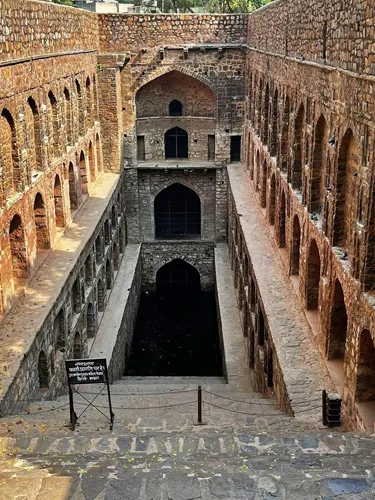
Unlike the other stepwells we have seen, visitors are usually permitted to walk all the way down the steps, though the very bottom may be roped off if water levels are high.
Here at Backpack and Snorkel Travel Guides, we promote self-guided walking tours.
But we realize that not everybody likes to walk by themselves in a foreign city. So, just in case that you rather go with ab guide: NO PROBLEM! Please see the GuruWalk and Viator tours below.
free GuruWalk tours
paid Viator tours
Opening Hours and Admission Fee
Opening Times: Generally, 9:00 AM to 5:30 PM (Daily).
Entry Fee: Admission is free to all visitors.
History and Naming
While the exact origins of the baoli are murky, its history spans over 600 years:
Legendary Founder: The name Agrasen ki Baoli is traditionally attributed to the legendary King Agrasen of the solar dynasty, who is believed to have originally constructed a stepwell here in the Mahabharata era.
Existing Structure: The structure seen today dates back to the Tughlaq or Lodhi period (roughly the 14th century) of the Delhi Sultanate. The style, with deep, multi-level stairs and curved stone arches, is characteristic of this era, designed to efficiently access groundwater.
Renewal: The stepwell was likely refurbished and rebuilt several times throughout Delhi’s history, including during the reign of the Agrawal community (said to be descendants of King Agrasen), who were key traders and financiers in the region.
Importance: A Medieval Reservoir
Stepwells were crucial infrastructure in the arid and semi-arid regions of India, serving multiple vital roles:
Water Conservation: The primary function was to maintain a stable, year-round water supply. The deep steps allowed people to reach the water level even when the water table dropped significantly during the dry summer months.
Community Hub: Like the Panna Meena ka Kund in Jaipur, the baoli was a social center. It offered a rare cool, shaded spot for residents to meet, relax, and conduct daily tasks away from the intense Delhi heat.
Architectural Landmark: It is a perfect example of the hydraulic engineering mastered by medieval Indian builders.
Architecture: The Geometry of Depth
The architecture of Agrasen ki Baoli is both functional and dramatic, characterized by its extraordinary depth and symmetry:
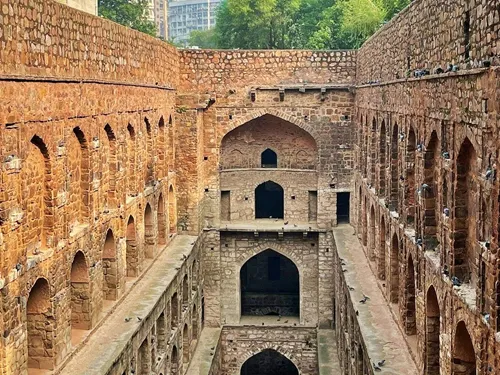
The Structure: The baoli is a straight, narrow rectangular shape, measuring 60 meters long and 15 meters wide.
The Steps: It features 103 steps arranged in three distinct levels or tiers. These tiers are separated by landings where water would collect during the monsoon season.
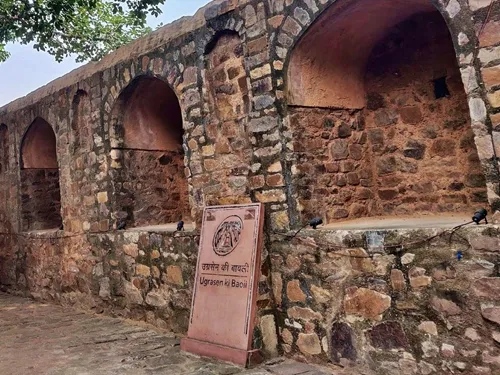
The Niches and Arches: Flanking the steps on three sides are dozens of arched niches and deep alcoves. These served as resting spots for people carrying water or as small shrines and prayer rooms. They also contribute to the unique echo and atmospheric depth of the structure.
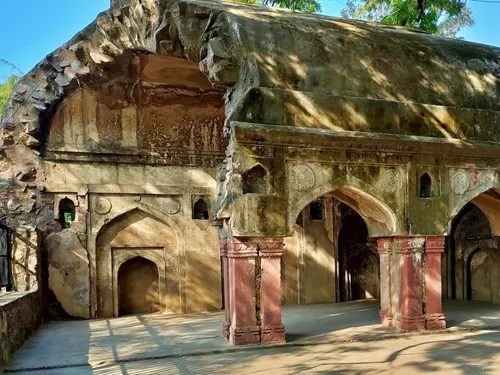
Upper Structure: The visible top section, which features a pillared entrance, once likely contained small rooms for guards or attendants.
Where do you want to go now?








Author: Rudy at Backpack and Snorkel
Bio: Owner of Backpack and Snorkel Travel Guides. We create in-depth guides to help you plan unforgettable vacations around the world.

Other popular Purple Travel Guides you may be interested in:
Like this Backpack and Snorkel Purple Travel Guide? Pin these for later: